virtual spatial transcriptomics use case
Give your archive a new role in discovery.
A collection built for one study can become the starting point for another. With predicted spatial gene expression from its H&E slides, you can investigate molecular patterns across cases that were never profiled and bring years of archived material into a new research programme.
Worked through for Pharma & Biotech, Academia & Research and Biobanks.
The research opportunity
Which molecular patterns connect the cases in your archive, and what could those connections reveal?
Why it matters
Bring more of the cohort into the question
A finding in a few samples raises a question about how widely it occurs. Perhaps a gene caught your attention in the samples you profiled, while dozens of other cases remain represented only by histology. Aurora gives those H&E slides predicted expression maps, letting you investigate the candidate across a broader set of cases.
Because each slide receives predictions for the same genes, you can compare their spatial patterns and look for similarities the original study never examined. Cases outside the measured subset can now contribute to developing the hypothesis.
Follow the differences back into the tissue
The location of a predicted pattern gives you something specific to investigate. A difference between samples may prompt you to look more closely at a boundary or a region within a section. The maps keep expression predictions connected to the H&E image, so you can study that difference alongside the tissue structures around it.
While a cohort comparison reveals which cases merit attention, the spatial view helps you decide what to ask about them. A broad association can become a question about a particular gene in a particular region.
Keep earlier collections relevant to new research
An archived image can support scientific work after the original experiment has ended. When a new candidate gene or hypothesis emerges, you can return to the slides without collecting another section. This gives earlier cohorts a continuing role in research, including cases whose blocks are no longer available.
For collections that still hold tissue, the same work helps you identify material for a new collaboration or follow-up study. The archive becomes a resource researchers can investigate by predicted biology as well as by its existing catalogue.
Explore the possibilities
The DeepSpot-M preprint reports a virtual atlas of 28,664 slides across 32 cancer types, showing the scale at which existing images can support new molecular questions.
Look within a case, then ask across the cohort
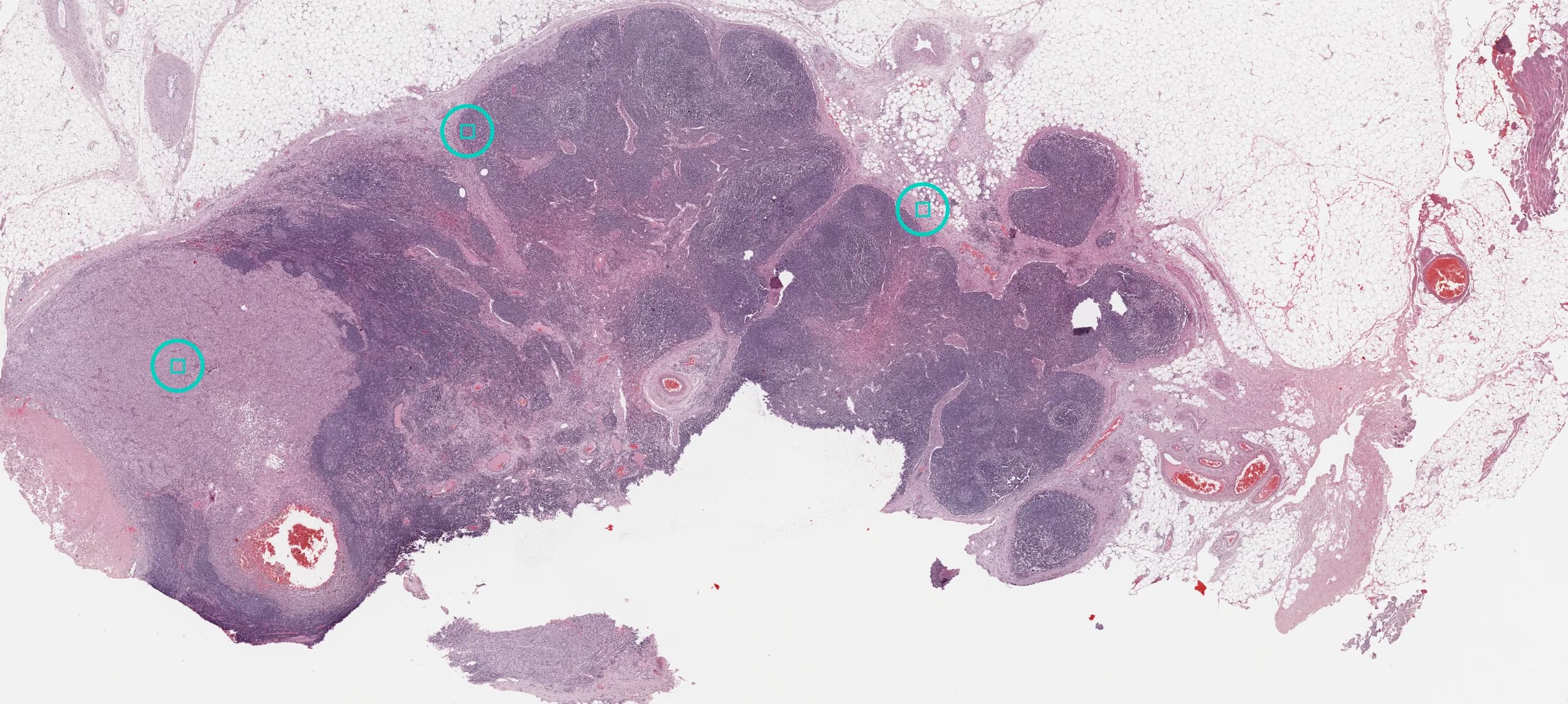
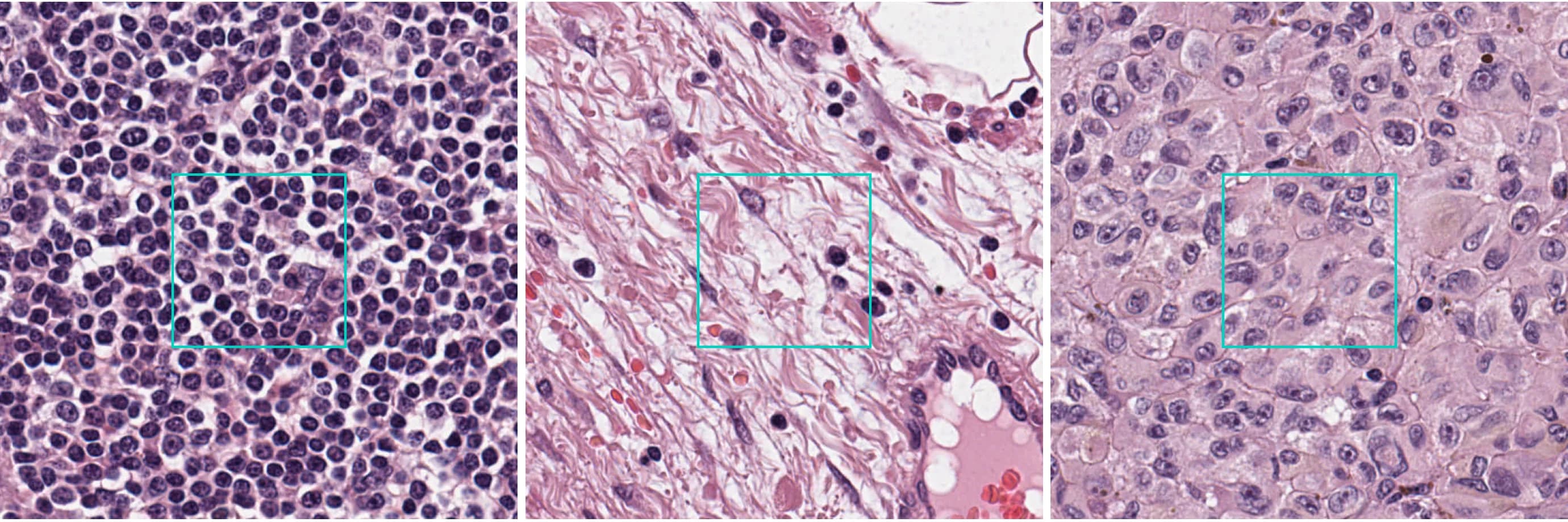
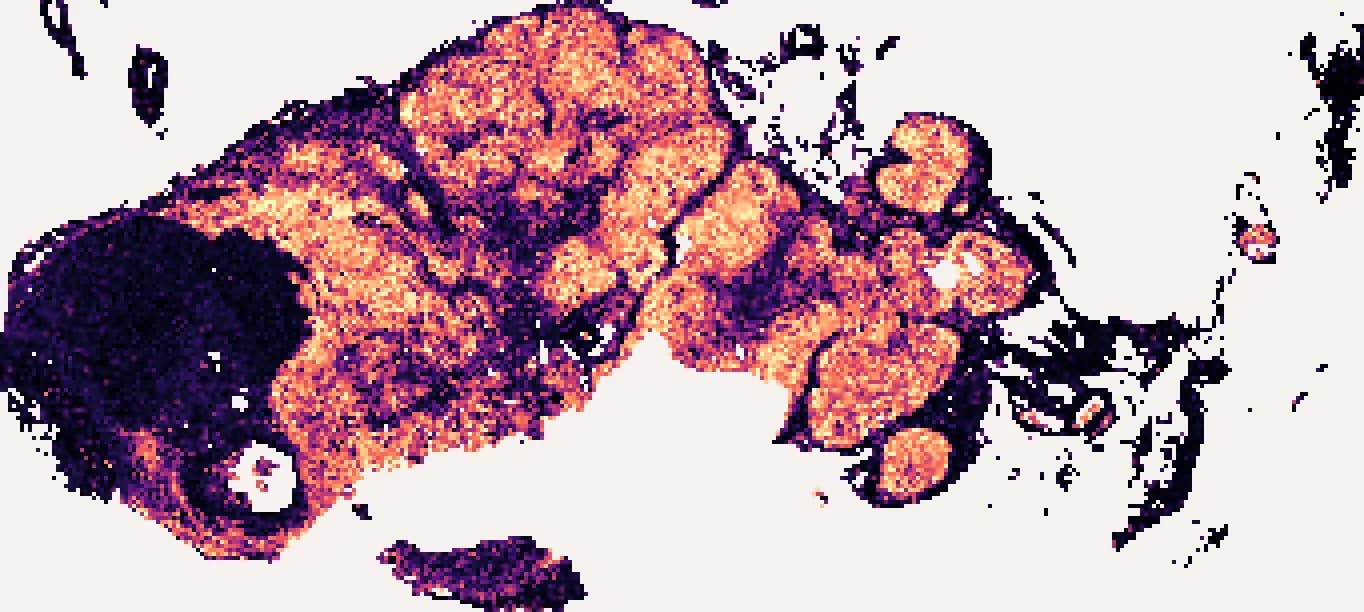
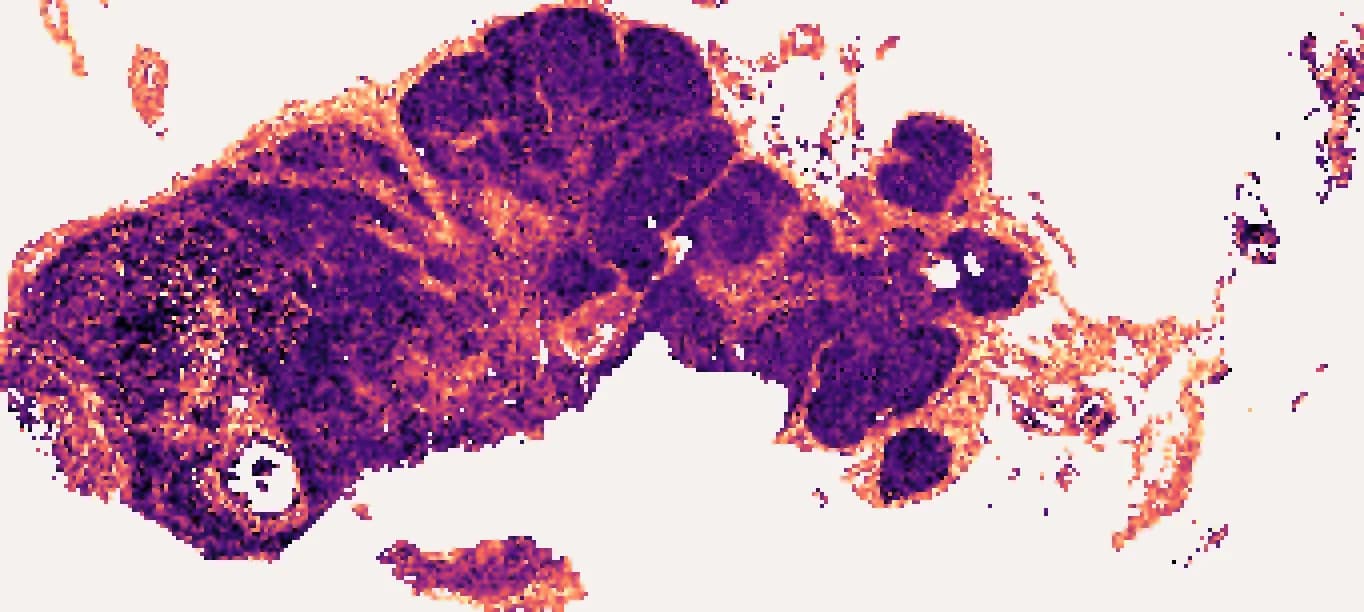
This archived slide shows a melanoma that had spread to a lymph node. Explore the predicted maps for MS4A1 and COL1A1 to compare the B-cell follicles and collagen-rich regions.
 higher
Your input and output
- Input
- A digitised H&E slide for each sample you want to explore.
- Output
- Virtual spatial transcriptomics for 19,338 genes at every retained tissue tile.
Take the next step
Start with an example slide, or talk to us about your cohort.