See new possibilities for the medicines of tomorrow.
Bring a new molecular perspective to your existing cohorts. Revisit familiar questions, explore unexpected connections and open directions beyond the original scope of a study.
Aurora predicts spatial gene expression from the H&E slides behind your studies, so a cohort you know well can be explored again on the same genes.
Applications
A broader field of opportunity for discovery
- Explore
Revisit a completed study with a new question
The slides a finished study left behind can take up a question it was never designed to answer, including once its tissue is exhausted or reserved for other work.
- Compare historical cohorts on the same predicted genes
- Explore a question the original study never asked
- Take candidate findings to validation in current cohorts
Built onOut-of-the-box predictionComparative spatial analysis
DeepSpot-M produced a virtual spatial atlas of 28,664 slides across 32 cancer types, published on Hugging Face.[1, 2]
- Explore
Follow unexpected connections across the whole cohort
Samples from the same indication can carry very different tissue, while molecular characterisation usually reaches a subset of them.
Predicted expression on every slide sets the profiled cases beside the rest, and a biomarker hypothesis can be explored where it sits in the tissue.
- Compare predicted expression across every sample
- Propose subgroups of patient samples for research and hypothesis generation
- Find where a candidate gene's predicted expression runs highest
- Add a sample-matched bulk profile to the prediction where one exists
Built onOut-of-the-box predictionComparative spatial analysisSample-matched bulk RNAThe analysis report and the explorer
The web upload does not take a bulk profile. It goes in through the Python package and the API, on the Commercial route.See Commercial
DeepSpot-M predicts 19,338 protein-coding genes at every retained tile of a slide, from the H&E image alone.[1]
- Extend
Take a study beyond the panel it was designed around
With our team, a completed spatial study gains predictions for the protein-coding genes its panel left out, adapted to the data it measured.
The predicted genes stay labelled beside the measured ones, so a question about the tissue around a target can go past the edge of the panel.
- Examine the genes around a target, off the panel
- Restore genes lost to dropout or quality control, as labelled predictions
- Choose which off-panel genes move into validation
Built onPanel extensionFinetuneRestore genes
Arranged with our team, on the Advanced R&D route.See Advanced R&D
The DeepSpot-M preprint demonstrates transfer to held-out cancers, and adaptation to a new cohort from one slide.[1]
- Look ahead
Begin each new study with a wider view
Predicted expression across the candidate samples shows where the biology a study is about sits, before any tissue is cut for it.
- Rank candidate samples on the genes the question depends on
- Aim each capture area at the region the hypothesis turns on
- Choose a targeted panel after looking at predicted expression
Your route
Plan the next step for your programme
Bring a cohort, a biomarker question or a completed study to the conversation.
Companies running translational and discovery programmes.
Worked examples
See each direction on real tissue
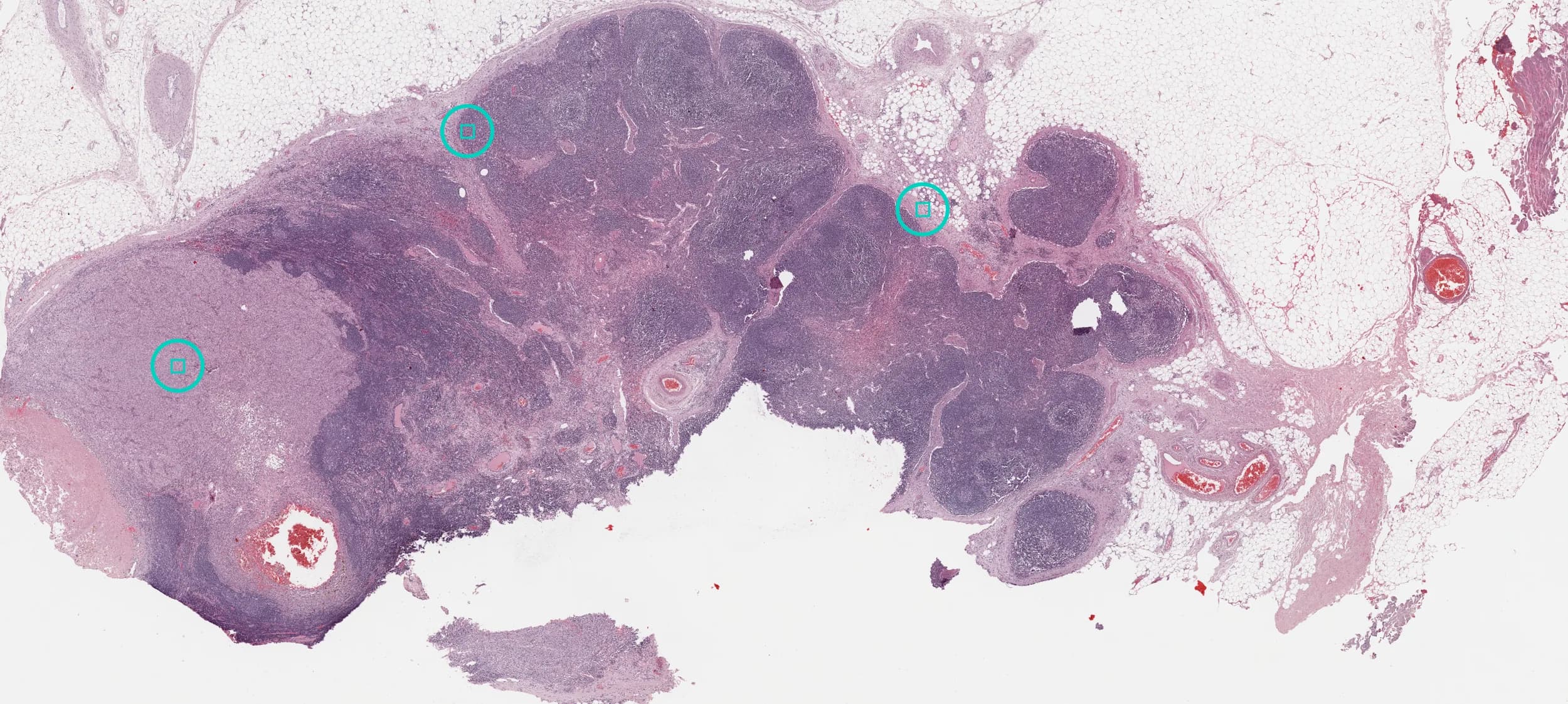
A new chapter for your collection.
Explore the whole archive on the same predicted genes, and keep measured follow-up for the hypotheses that survive.
- You bring
- One H&E slide per sample. Nothing else.
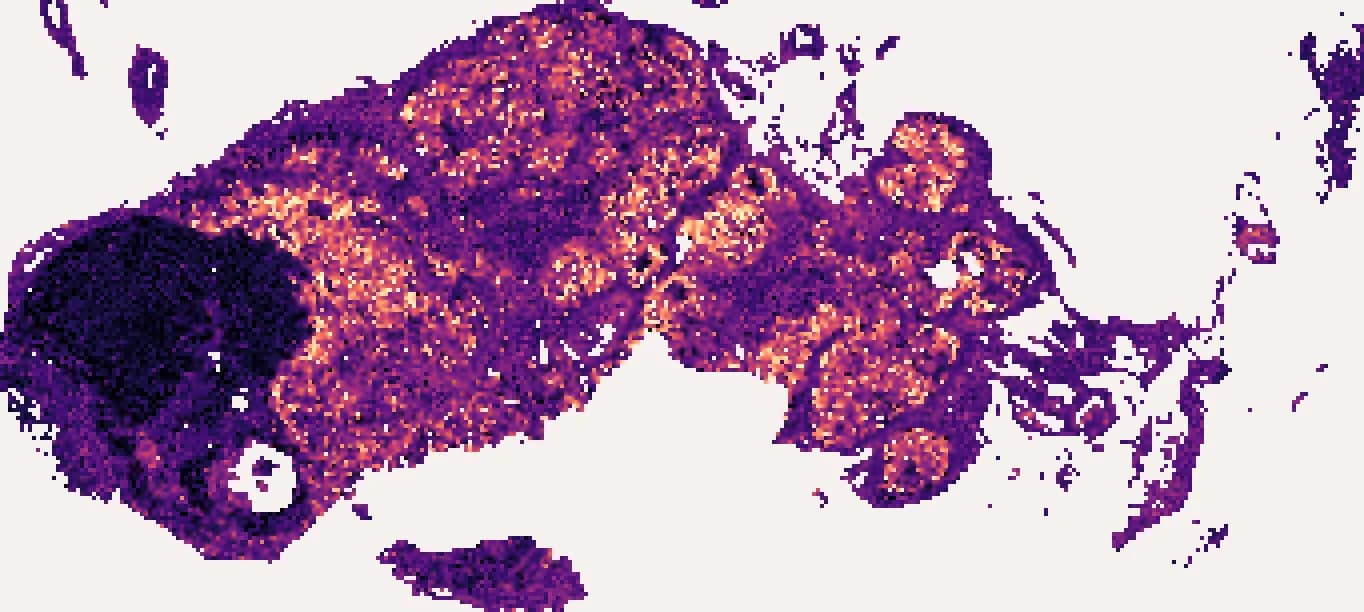
Give molecular data a sense of place.
Add the sample's bulk RNA profile to the prediction for its slide, and keep the same genes and file format.
- You bring
- An H&E slide, and a bulk RNA table for the same block.
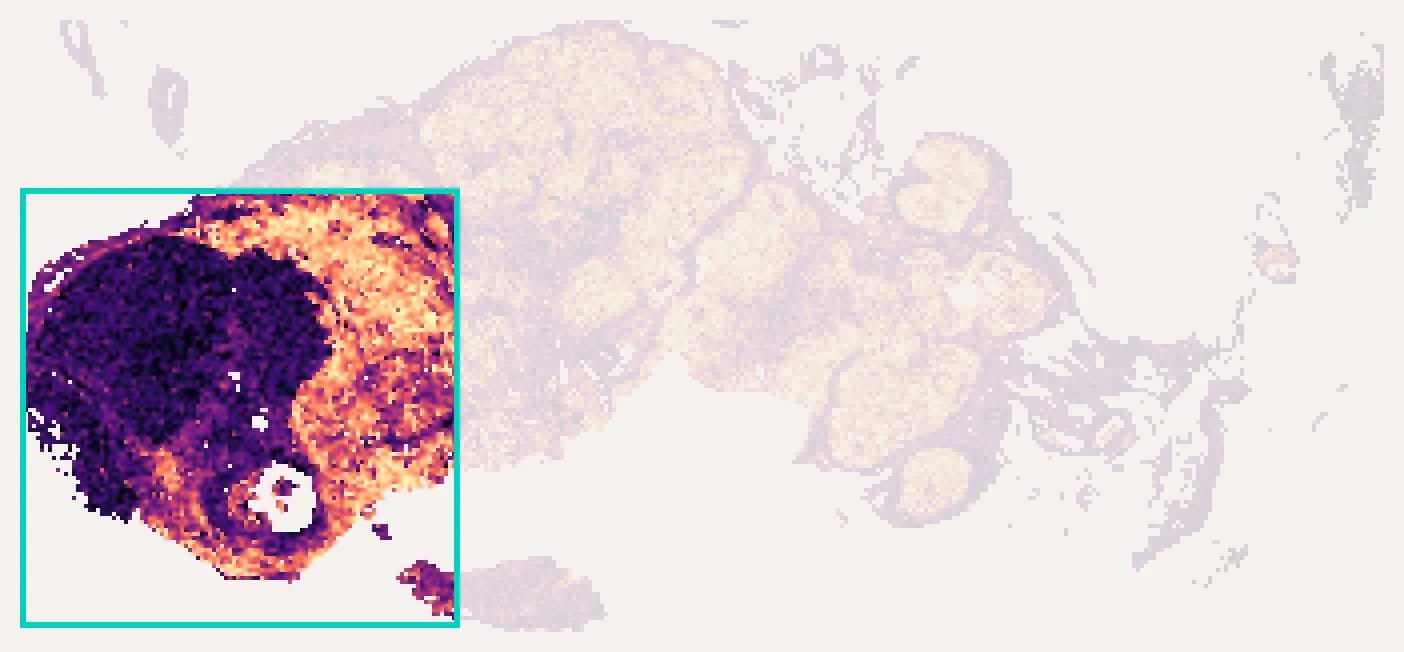
Begin your next experiment with a wider view.
Rank the candidate samples on predicted expression, and choose where each capture area goes.
- You bring
- The slides you are choosing between.
References
- [1]Nonchev K, Dawo S, Silina K, Koelzer VH, Rätsch G. DeepSpot-M: a multimodal foundation model for transcriptome-wide virtual spatial transcriptomics from histology. medRxiv. Preprint, 2026. https://doi.org/10.64898/2026.06.19.26356060 (opens in a new tab)
- [2]Nonchev K, Dawo S, Silina K, Koelzer VH, Rätsch G. TCGA Virtual Spatial Transcriptomics Atlas. Hugging Face. Dataset, 2026. https://huggingface.co/datasets/ratschlab/TCGA_virtual_spatial_transcriptomics_atlas (opens in a new tab)