virtual spatial transcriptomics use case
Follow discoveries beyond your original panel.
Your panel captures the question you started with, but a finding may take you somewhere else. With our team, you can investigate predicted expression for additional genes in the same tissue regions, allowing the result to shape what you ask next.
Worked through for Academia & Research and Sequencing & Core Facilities.
The research opportunity
What could you learn about a finding by investigating genes beyond the panel that revealed it?
Why it matters
Let the finding lead to the next question
The most interesting observation may involve genes you had no reason to select at the start. A target might prompt a question about the tissue around it, or a difference between two regions might suggest another group of genes to investigate. Those ideas emerge from the experiment itself, after the panel has been chosen.
Although the measured gene list stays fixed, the analysis can move beyond it. Working with our team, you can add predictions for off-panel genes and follow the direction the result suggests.
Investigate the biology around your target
Additional genes give you more ways to examine a region that already matters to the study. You can ask whether predicted expression of a related gene follows the same spatial pattern as the measured target, or differs in neighbouring tissue. This turns a single observation into a set of more specific hypotheses about the region.
Because the new predictions use the positions your assay reported, you can make those comparisons within the original spatial analysis. The connection between the finding and the next question stays visible.
Give the completed experiment further reach
The image and spatial data you already collected can support another round of investigation. Our team arranges panel extension using those existing inputs. Measured genes remain unchanged, while the additional genes appear beside them as labelled predictions.
You can then investigate several off-panel leads before deciding which deserve a new measurement. The original experiment continues to contribute as your understanding of the tissue develops.
Explore the possibilities
The DeepSpot-M preprint demonstrates predictions for genes excluded from training, supporting exploration beyond the measured panel.
Keep following the finding in the same tissue
Additional predicted genes share the positions of the measured panel, letting you return to a region of interest with a broader set of molecular questions.
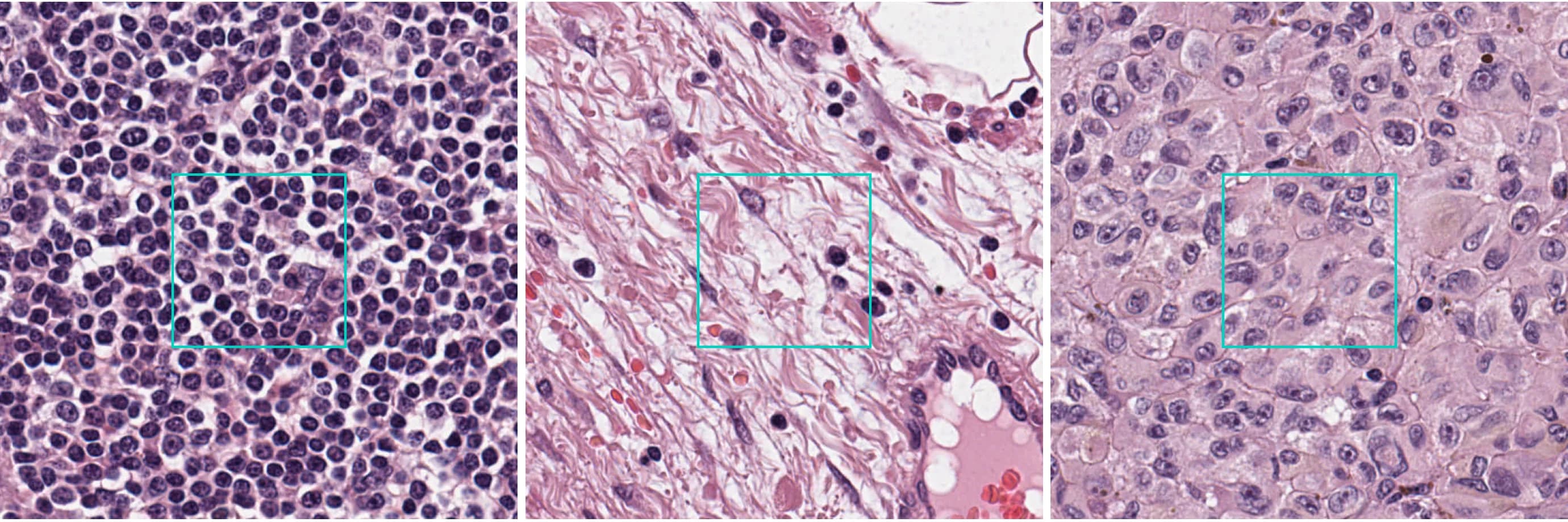
Your input and output
- Input
- An H&E image and measured spatial expression, with coordinates for each spot.
- Output
- Virtual spatial transcriptomics for off-panel genes at the measured positions.
Take the next step
Start with an example slide, or talk to us about your cohort.