Your archive can shape what comes next.
Give years of carefully preserved tissue a continuing role in discovery. Open new questions, new collaborations and new possibilities for the collection you have built.
Most of the collection has never been read for expression. Aurora predicts spatial gene expression from its digitised H&E slides, and the tissue stays on the shelf.
Applications
The continuing scientific life of a collection
- Explore
Let the collection answer questions it was never built for
Every digitised H&E slide gains a virtual molecular layer, read the same way from the oldest accession to the newest.
- Explore predicted genes and patterns across the collection
- Compare samples from different studies on one predicted reading
- Find cases that share a predicted pattern the catalogue cannot see
Built onOut-of-the-box predictionComparative spatial analysis
DeepSpot-M produced a virtual spatial atlas of 28,664 slides across 32 cancer types, published on Hugging Face.[1, 2]
- Explore
Keep a sample in research after its block is gone
When a block runs out, the digitised slide it leaves is enough for predicted spatial gene expression, and the sample stays on offer to researchers as computational material.
- Keep exhausted samples in research use as predicted data
- Include slides from used-up blocks in a new study
- Point researchers to validation material that still exists
Built onOut-of-the-box prediction
DeepSpot-M predicts 19,338 protein-coding genes at every retained tile of a slide, from the H&E image alone.[1]
- Extend
Give earlier measurements a place in the tissue
Where an earlier study left bulk RNA for a sample, that profile can join its slide.
Provide a bulk RNA profile and the spatial prediction improves further.
- Put earlier bulk RNA into a spatial context
- Use a measurement the collection already holds
- Keep one result format across profiled and unprofiled samples
Built onSample-matched bulk RNAOut-of-the-box prediction
The web upload does not take a bulk profile. It goes in through the Python package and the API, on the Academic Research route.See Academic Research
- Look ahead
Protect rare tissue for the experiment that needs it
Researchers can explore predicted expression across the digitised collection first, and sections go to the candidates a question points to.
- Shortlist candidate samples before any section is cut
- Mark the regions of each candidate worth profiling
- Release sections for the shortlist and no more
Your route
The rule follows the research
Biobanks, pathology archives and the groups that curate them.
The eligibility rule follows the research and not the archive: a collection screened for academic and non-profit research can use Academic Standard, and commercial use of it runs under a separate agreement. Ask before you prepare a large collection, so the route is settled first.
Worked examples
What a collection can open, on real tissue
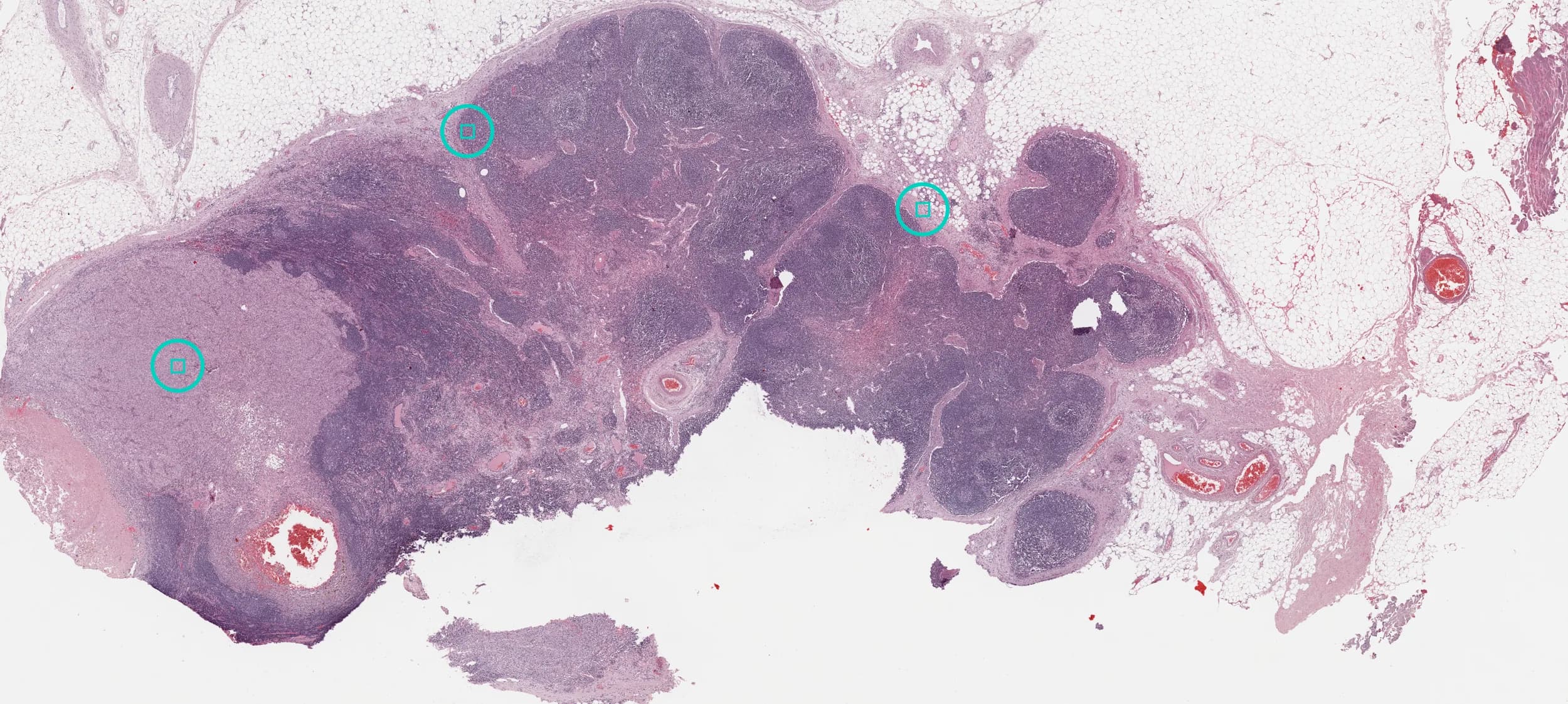
A new chapter for your collection.
Explore the whole archive on the same predicted genes, and keep measured follow-up for the hypotheses that survive.
- You bring
- One H&E slide per sample. Nothing else.
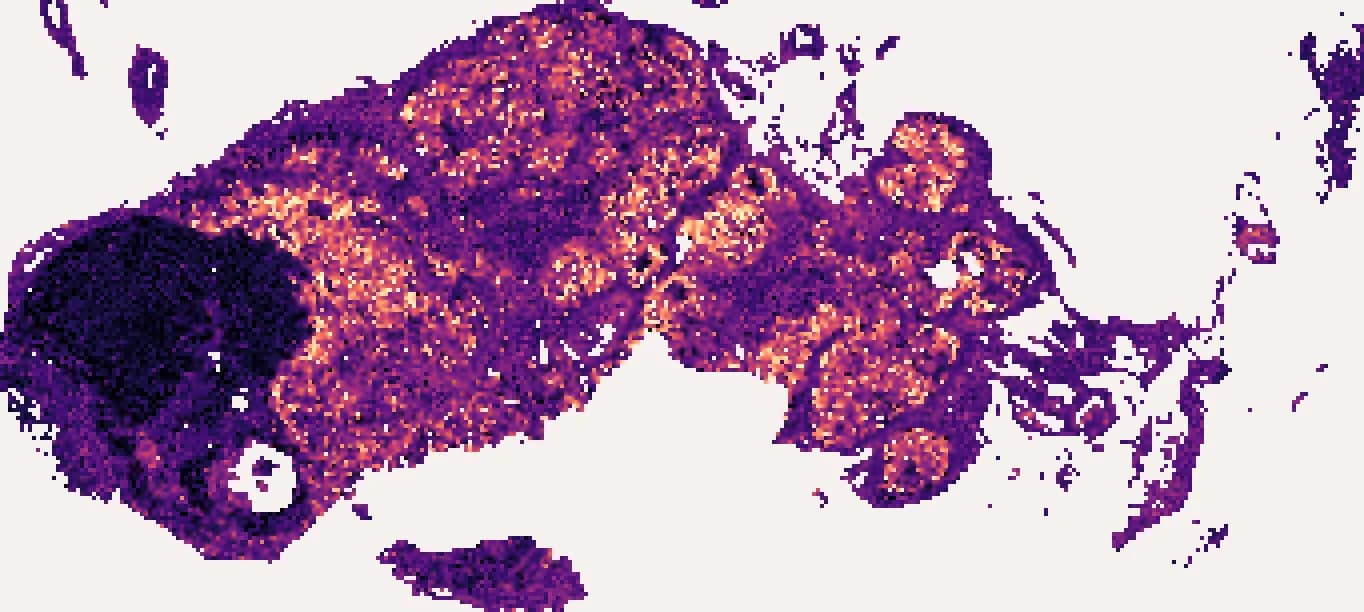
Give molecular data a sense of place.
Add the sample's bulk RNA profile to the prediction for its slide, and keep the same genes and file format.
- You bring
- An H&E slide, and a bulk RNA table for the same block.
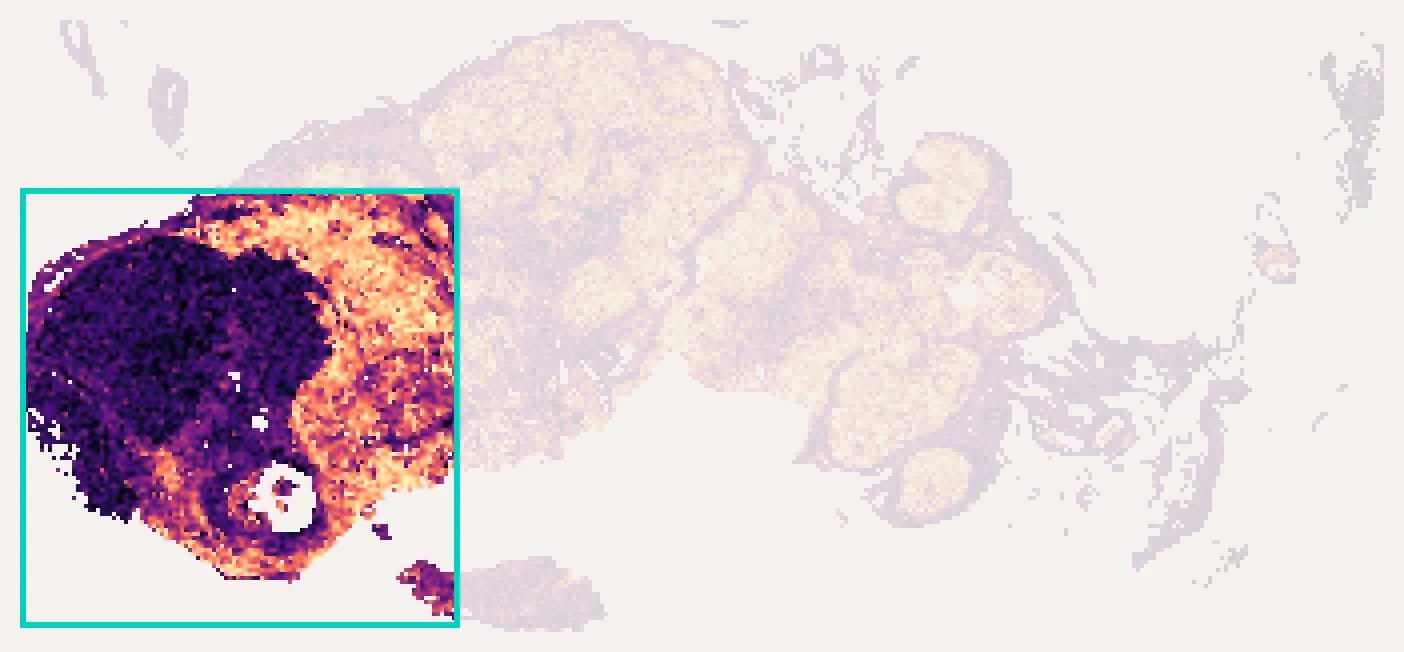
Begin your next experiment with a wider view.
Rank the candidate samples on predicted expression, and choose where each capture area goes.
- You bring
- The slides you are choosing between.
References
- [1]Nonchev K, Dawo S, Silina K, Koelzer VH, Rätsch G. DeepSpot-M: a multimodal foundation model for transcriptome-wide virtual spatial transcriptomics from histology. medRxiv. Preprint, 2026. https://doi.org/10.64898/2026.06.19.26356060 (opens in a new tab)
- [2]Nonchev K, Dawo S, Silina K, Koelzer VH, Rätsch G. TCGA Virtual Spatial Transcriptomics Atlas. Hugging Face. Dataset, 2026. https://huggingface.co/datasets/ratschlab/TCGA_virtual_spatial_transcriptomics_atlas (opens in a new tab)